
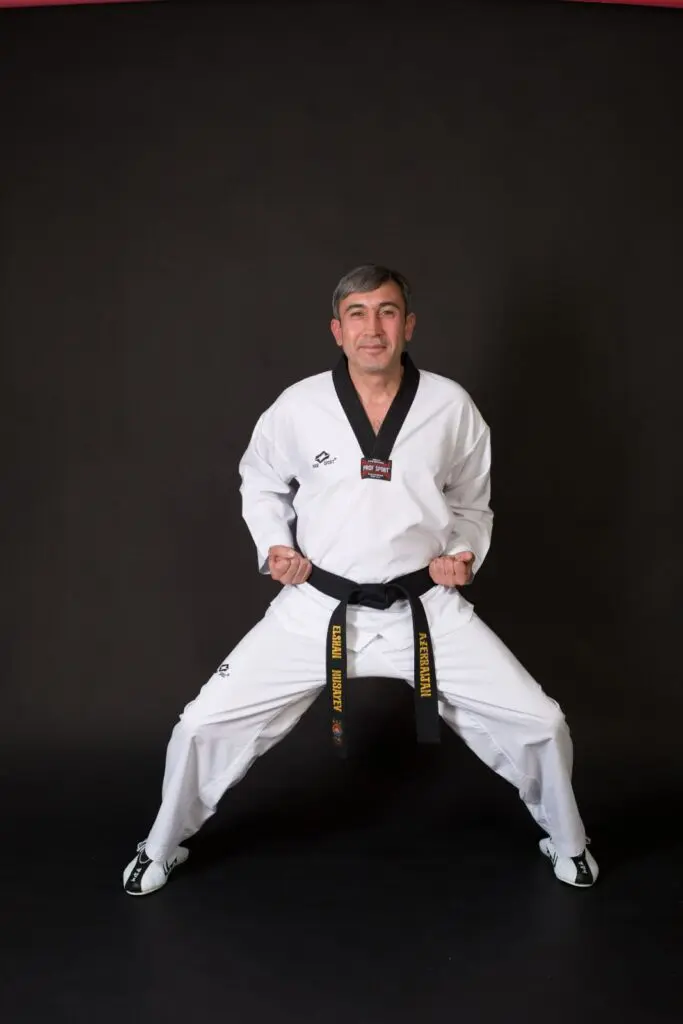
Balance is the foundation of everything in taekwondo. Without it, your kicks lose power, your stances fall apart, and your overall performance suffers. If you want to know how to improve balance in taekwondo, you are already thinking like a serious martial artist.
Good body control separates beginners who struggle from students who move with confidence and precision on the mat.
The good news is that better stability is a skill you can build. It comes down to strengthening the right muscles, practicing smart drills, and understanding how your weight shifts during kicks and stances.
Your core, hips, and ankles all work together to keep you upright. Train them well, and staying balanced on one leg or landing a turning kick becomes second nature.
Balance also develops alongside other taekwondo technique fundamentals for beginners, including posture, stance alignment, controlled movement, and proper kicking mechanics.
When these basics work together, students can build stronger technique without relying on speed or force to compensate for poor control.
Read on to discover practical drills, posture tips, and core exercises that will sharpen your body control and make every kick stronger and more precise.
How to Improve Balance in Taekwondo as a Beginner
We can build better balance with simple, consistent practice. There is no shortcut here. But with the right approach, progress comes faster than most beginners expect.
Start With the Right Taekwondo Posture for Beginners
Good posture sets the stage for balance improvement. Many beginners overlook this step. However, skipping it leads to bad habits that are hard to break later.
Taekwondo posture for beginners is not complicated. We just need to be aware of where our body parts are at all times. A tall spine, relaxed shoulders, and a low center of gravity make a huge difference.
- Keep your back straight and shoulders relaxed.
- Bend your knees slightly to lower your center.
- Distribute your weight evenly across both feet.
Our upper body plays a big role in balance too. When our shoulders tense up or lean forward, the rest of our body follows. Keeping the upper body calm and aligned helps us stay steady during movement.
Practice Taekwondo Balance Drills Daily
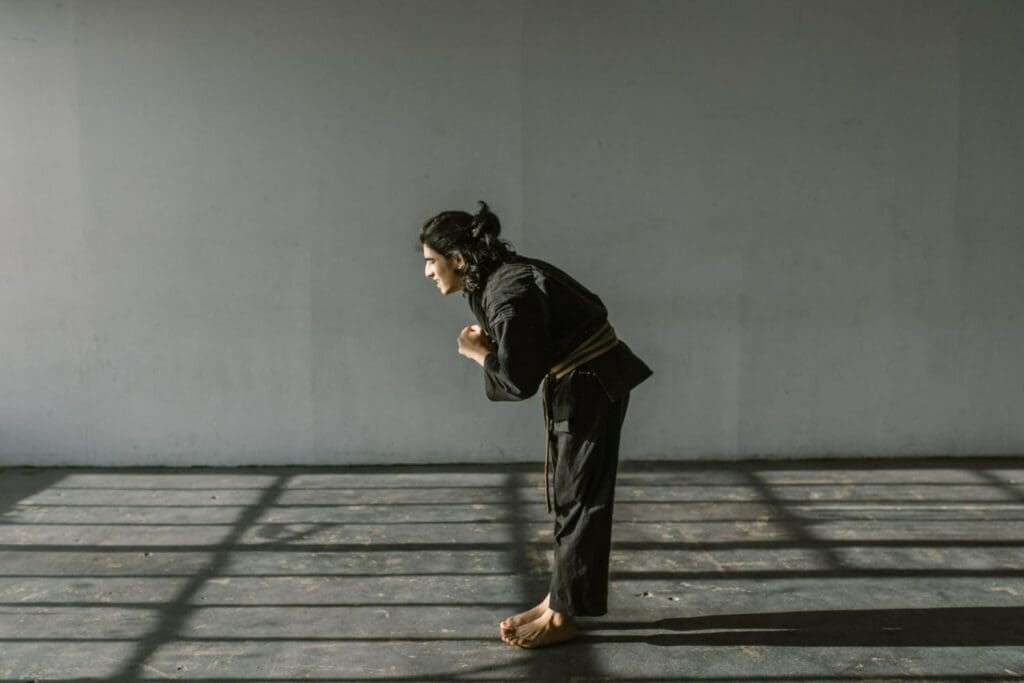
Consistent taekwondo balance drills build muscle memory. Doing them regularly helps our body respond automatically. Over time, maintaining stability feels natural rather than forced.
- Single-leg standing hold for 30 seconds on each side.
- Slow-motion kick practice to train stability.
- Balance board exercises to challenge your core.
- Eyes-closed standing to sharpen body awareness.
The one leg balance taekwondo drill is one of the most effective tools we have. Holding a single-leg stance builds the small stabilizing muscles around our ankle and knee. These muscles help keep us upright as the kicking leg leaves the ground.
A balance board for martial arts training takes things further. Standing on an unstable surface forces our body to make constant small adjustments. This develops the balance reflex that helps correct a wobble before it turns into a stumble.
Eyes-open drills are a good starting point. Practicing with eyes closed adds another level of difficulty because the body can no longer depend on visual cues. Instead, it must rely more heavily on internal awareness.
Learn How to Stay Balanced While Kicking
Kicking without falling takes focused, deliberate training. Many balance problems during kicks come from rushing. We lift the leg too quickly, lose our center, and stumble.
Knowing how to stay balanced while kicking starts with the standing leg. That leg must be strong and stable before the kicking leg even leaves the ground. Therefore, we always focus on the base first.
- Engage your core before lifting your kicking leg.
- Fix your gaze on a steady point ahead.
- Land your kicks softly to maintain control.
- Practice slow kicks before adding speed or power.
Fixing our gaze on one point ahead helps reduce unnecessary movement during kicks. It gives the brain a visual reference and can make it easier to stay steady.
Students who are still developing these skills often benefit from guided instruction, since an instructor can identify small posture or alignment problems that are difficult to notice alone.
For beginners comparing local training options, taekwondo near me can serve as a useful reference for finding instruction that emphasizes stance, kicking mechanics, and direct feedback.
Master Weight Distribution in Taekwondo Stances
Proper weight distribution in taekwondo helps prevent unnecessary instability. Each stance places weight differently for a reason. When we understand those differences, maintaining a solid base becomes much easier.
A basic two-foot stance is the easiest starting point. With both feet grounded, we have a stable base for learning how to shift weight slowly and deliberately.
- Front stance: place more weight toward the front leg.
- Back stance: shift more weight toward the rear foot.
- Fighting stance: keep weight centered and ready to move.
Our heel placement matters in every stance. Lifting the heel too early can shift our weight in the wrong direction. We keep it grounded until the movement requires it to rise.
The hips also guide weight distribution. When the hips stay aligned with the stance, the body’s weight falls where it should. When they twist or tilt unnecessarily, balance becomes harder to maintain.
In a fighting stance, our weight should stay responsive rather than becoming locked onto one leg. This allows us to move forward, backward, or sideways without first having to correct our position.
Build Core Strength to Support Taekwondo Body Control
Taekwondo core exercises do not need to be complicated. Simple movements performed with good form are more useful than advanced exercises performed poorly.
- Planks and side planks strengthen postural control.
- Dead bugs improve coordination and trunk stability.
- Hip bridges strengthen the hips and support stronger stances.
Planks teach our body to remain aligned under tension. This translates well to kicks and stances because the torso must stay steady while the legs move.
Hip bridges are often underrated, but they strengthen the muscles around the hips and pelvis that help stabilize the body. Stronger hips make it easier to maintain alignment while shifting weight between stances or supporting the body on one leg.
Start gradually rather than chasing high repetitions. Three well-executed sets of around 10 repetitions can be enough for many beginners.
Start Using These Tips on How to Improve Balance in Taekwondo Today
Better stability changes everything in taekwondo. Strong core muscles, good posture, and proper weight distribution help you kick with greater power and precision.
Single-leg drills and stability exercises build the foundation you need, while slow kicking practice teaches you to move with precision throughout each technique.
Now you know how to improve balance in taekwondo using simple, practical steps. Start small. Practice a single-leg stance for 30 seconds each day, then increase the challenge as you get stronger.
Keep your shoulders relaxed, your hips centered, and your movements deliberate.
These habits may seem simple, but consistency is what makes them effective.
As your stability improves, your kicks become cleaner, your stances feel stronger, and moving confidently around the mat becomes much more natural.